All Categories
Featured

Table of Contents
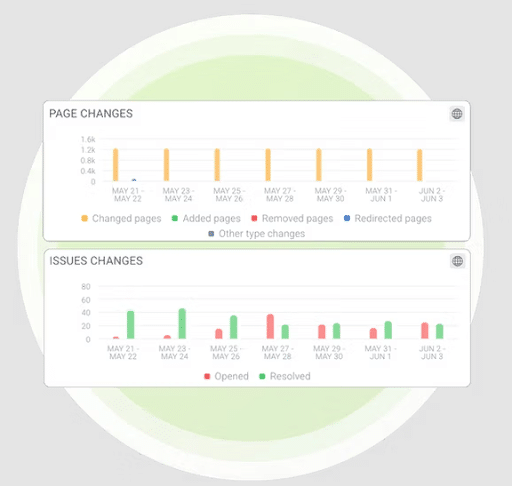

Modern Infrastructure and Search Optimization Platforms in 2026
By mid-2026, the shift towards serverless architecture has fundamentally altered how search information is processed. Tradition SEO tools, as soon as reliant on monolithic servers and delayed batch processing, have actually mostly been changed by cloud-native systems. These platforms operate as distributed networks, efficient in mimicing spider behavior across thousands of nodes all at once. This change is not simply about speed. It represents an essential move towards environment-aware information collection that mirrors the complex, localized nature of contemporary online search engine algorithms.
The requirement for 2026 needs that any enterprise-level tool needs to manage massive data consumption without manual scaling. In the past, running a complete site audit on a million-page domain might take days. Today, cloud-native solutions use containerized microservices to complete these tasks in minutes. This permits technical teams to determine concerns as they happen rather than discovering mistakes weeks after a deployment. High-frequency tracking has become the standard, as search engines now update their indexes with near-instantaneous level of sensitivity to site performance and structure.
Dispersed Architecture: Moving Beyond Monoliths
Modern platforms built on Kubernetes and serverless functions offer a level of elasticity that was difficult a few years ago. When a website undergoes a huge migration or an item launch, the SEO stack must expand its capability instantly. These systems utilize auto-scaling groups to handle the increase of data, guaranteeing that performance metrics stay accurate even during peak traffic durations. This flexibility is vital for organizations that rely on high-performance search visibility to keep their market position. The dependability of these systems comes from their ability to fail over throughout several cloud regions, preventing the data gaps that utilized to plague older SaaS offerings.
Data residency has also end up being a considerable consider 2026. Cloud-native platforms allow companies to process SEO data within specific geographic limits to abide by developing personal privacy guidelines. By deploying employee nodes in particular regions, these platforms can see exactly what a localized user sees, capturing the nuances of local search results that a centralized server would miss. This granular exposure is a requirement for any worldwide entity handling a complex web presence across multiple continents and languages.
Many enterprises focus on Platform Cost Structures when building their technical stacks. This option reflects a broader trend of moving away from all-in-one suites toward specialized, interoperable elements. By utilizing APIs to connect SEO information straight into service intelligence tools, business can associate natural search efficiency with real income in real-time. This level of integration eliminates the guesswork that when specified the relationship between technical optimizations and monetary results.
Edge Computing and Real-Time Content Adjustment
The increase of Edge SEO marks one of the most significant shifts in the 2026 technical environment. Rather of awaiting a designer to carry out changes in the core codebase, SEO experts now use edge employees to customize headers, inject metadata, and reroute URLs before the demand even reaches the origin server. This layer of abstraction permits rapid screening and application without the standard traffic jams of a sprint cycle. Cloud-native platforms supply the screening environments for these edge implementations, making sure that modifications do not break site functionality.
Edge-level optimizations are particularly reliable for managing massive faceted navigation and pagination issues. By dealing with these logic-heavy tasks at the edge, websites decrease the load on their main servers, improving core web vitals and overall user experience. This performance is a main driver for companies investing in Professional Search Infrastructure Resources. The ability to carry out complicated logic at the network's edge indicates that the range in between a user's request and a totally optimized action is much shorter than ever.

Security has actually likewise been incorporated into the SEO workflow. Cloud-native platforms now include automated detection for bot spoofing and scraper security that can negatively affect crawl budgets. In 2026, protecting the integrity of the site's relationship with search engine spiders is as crucial as the material itself. These platforms compare "great" bots and malicious stars, guaranteeing that server resources are booked for the entities that in fact add to search presence and user conversion.
Data Management for Scalable Web Presence
The volume of information generated by a modern-day website is staggering. To make sense of this, 2026 platforms employ vector databases and artificial intelligence designs to categorize and analyze material at scale. Unlike the easy keyword matching of the past, these systems comprehend semantic relationships and intent. They can predict how a modification in content structure may affect rankings across a broad cluster of related terms. This predictive capability permits groups to be proactive, attending to potential drops in exposure before they take place.
Real-time log file analysis is another function that has become standard. By streaming server logs straight into the SEO platform, technical personnel can see precisely how online search engine are interacting with the site every second. This exposes crawl inadequacies that standard aggregators would miss out on. For instance, if a search engine is stuck in a redirect loop or wasting energy on low-value pages, the platform sends out an immediate alert. This level of oversight is required for preserving a healthy technical search foundation in a significantly competitive digital environment.
Businesses looking for Platform Cost Structures for Enterprise frequently discover that legacy tools can not stay up to date with cloud-native needs. The requirement for sub-second latency in information reporting has actually made old-school reporting control panels outdated. Rather, 2026 platforms use streaming data visualizations that update as new information gets here. This permits a more agile technique to search method, where modifications can be made day-to-day instead of monthly.
The Economic Case for Cloud-Native SEO
The expense structure of SEO software application has undergone a major shift. The industry is moving away from seats and fixed-tier rates towards consumption-based designs. Business only spend for the compute power and storage they really use. This is especially helpful for seasonal services or those with changing site sizes. A company can scale its SEO keeping track of up throughout a major campaign and scale it back down afterward, ensuring that the budget plan is utilized effectively. This financial flexibility makes it easier for smaller sized companies to access the exact same top-level tools as large corporations.
Furthermore, the reduction in manual work is a substantial expense saver. Automation in cloud-native platforms manages the repeated tasks of website auditing, link monitoring, and rank tracking. This frees up human experts to focus on high-level strategy and creative problem-solving. In 2026, the value of an SEO specialist is found in their capability to interpret information and drive cross-functional tasks, not in their ability to export spreadsheets. The platform deals with the "heavy lifting" of data collection, while the humans supply the context and instructions.
Interoperability is the last pillar of the 2026 requirement. A platform that can not speak with the rest of the marketing stack is a liability. Modern tools utilize standardized schemas and open APIs to make sure that data flows easily between the SEO platform, the CRM, and the CMS. This develops a unified view of the customer journey, from the initial search question to the last purchase. When every department is taking a look at the exact same information, it becomes a lot easier to secure executive buy-in for technical SEO initiatives that may otherwise be seen as odd or low-priority.
Final Standards for a Fully Grown Market
As we move through 2026, the difference between "SEO tool" and "cloud facilities" continues to blur. The most successful companies treat their search optimization stack as a core part of their technical architecture. This includes a commitment to modern data practices that focus on speed, accuracy, and scalability. The standard is no longer about having the most features, however about how well those functions integrate into a serverless, globalized web.
The platforms that lead the marketplace are those that use the most transparency into their data collection and processing methods. Black-box algorithms are out; explainable AI and verifiable data streams remain in. As online search engine themselves become more complex, the tools utilized to monitor them should match that complexity with advanced, cloud-based solutions. For any entity looking to preserve significance in search, embracing these cloud-native requirements is no longer a choice-- it is a requirement for survival in the digital economy of 2026.

Latest Posts

Navigating a Harsh 2026 SEO Environment

Essential PBN Management Tools for High Scale
Acquiring High-Authority Backlinks at Scale